
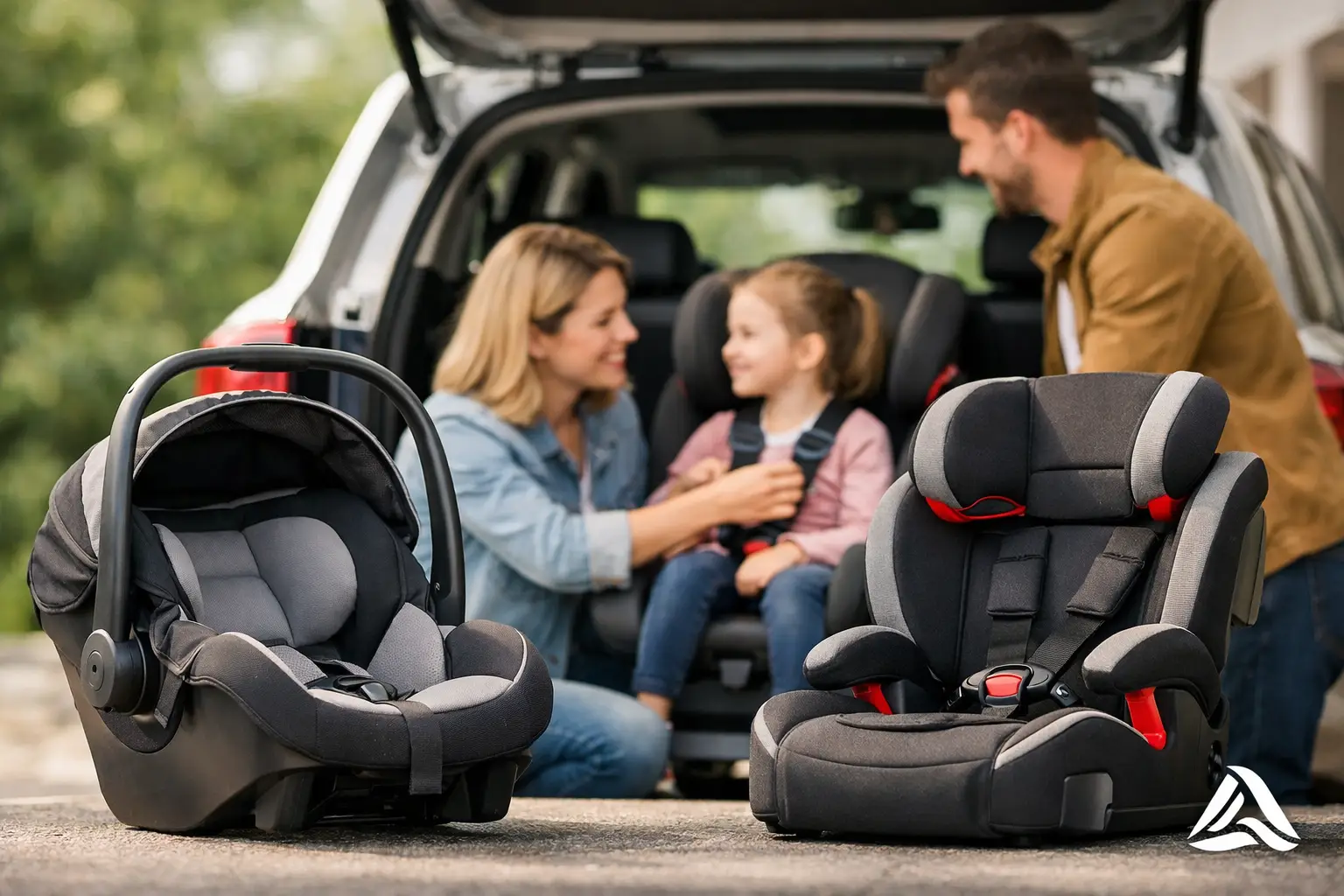
A family airport transfer should begin with bags packed, flight details confirmed, and one less thing to worry about in the back seat. Knowing how to choose child seats helps protect your child while making the ride from LAX, John Wayne Airport, or Long Beach Airport calmer for everyone.
The right seat is not simply the one labeled for your child’s age. It must match their current height and weight, be appropriate for their stage of development, fit the vehicle correctly, and be installed according to the manufacturer’s instructions. Whether you are driving yourself or reserving private transportation, those details matter.
How to choose child seats by your child’s stage
Start with your child’s measurements, not the seat you used on the last trip. Children grow quickly, and the limits printed on the seat label and in its manual are the deciding factors. Age can point you toward the correct type of seat, but height, weight, and proper harness fit determine whether it is still suitable.
Rear-facing seats for infants and young toddlers
A rear-facing infant seat or convertible seat is designed to support a young child’s head, neck, and spine in a crash. Keep a child rear-facing until they reach the maximum rear-facing height or weight limit set by that seat’s manufacturer. Many children can remain rear-facing beyond age two, and that added time can provide meaningful protection.
For an infant carrier, check that the harness sits at or below the shoulders when rear-facing and that the chest clip is positioned at armpit level. The harness should lie flat without twists and be snug enough that you cannot pinch excess webbing at the shoulder. Bulky coats should come off before buckling, since they can create dangerous slack.
Forward-facing seats with a harness
Once a child has outgrown the rear-facing limits, use a forward-facing seat with an internal harness. The top tether is a vital part of many forward-facing installations because it limits how far the child’s head moves forward in a collision. It should be attached to the vehicle’s designated tether anchor, not to a cargo hook or another unapproved point.
Children should remain in a harnessed seat until they exceed its forward-facing limits. Moving to a booster too soon may feel convenient, especially when traveling with multiple children, but a child needs the maturity to sit upright for the entire ride without leaning, slouching, or placing the shoulder belt behind their back.
Booster seats for older children
A booster seat does not use its own harness. Instead, it raises the child so the vehicle’s lap-and-shoulder belt fits over the strongest parts of the body. The shoulder portion should cross the center of the chest and collarbone, while the lap belt should rest low across the upper thighs, not the stomach.
A high-back booster can be a practical choice in a vehicle with low seat backs or no head restraint behind the child. A backless booster may work well when the vehicle has an appropriate head restraint and the child fits the booster’s stated requirements. Neither option is automatically better. The correct choice depends on the child and the vehicle.
When a child is ready for the vehicle seat belt
A child is ready to use the vehicle seat belt alone only when it fits correctly without a booster. Their back should rest against the seat, knees should bend naturally at the edge, feet should be supported, and the belt should stay positioned correctly throughout the ride. Many children do not achieve this fit until they are around 4 feet 9 inches tall.
California child passenger rules provide a legal baseline, but they are not a shortcut for good fit. Requirements can change, so parents should confirm current state rules before traveling. More importantly, continue using the seat that fits your child safely, even when a different option seems easier for a short ride.
Choose a seat that fits the vehicle, too
A highly rated child seat cannot do its job properly if it does not install securely in the vehicle you are using. Before a road trip, airport pickup, or vacation transfer, check the vehicle and child seat manuals together. They explain approved seating positions, LATCH limits, belt-routing instructions, recline settings, and tether locations.
The center rear seat is often a good location when it provides a secure installation, but it is not always the best choice. Some center positions have no lower anchors, an unusual belt setup, or a seat contour that makes installation difficult. A properly installed outboard rear position is safer than a loose center installation.
A correctly installed seat should not move more than one inch side to side or front to back when checked at the belt path. If you are using a rear-facing seat, confirm its recline angle as well. An angle that is too upright can allow a young infant’s head to fall forward; an angle that is too reclined can affect installation.
For families reserving an SUV, do not assume that a larger vehicle eliminates fit concerns. Three seats across may still be challenging, and a third-row position can have different anchor access or belt geometry. Share each child’s age, height, weight, and the number of seats needed when making the reservation so the transportation provider can assign an appropriate vehicle.
Four details to check before using any child seat
Before every major trip, take a few minutes to confirm these essentials:
- Check the seat’s expiration date, labels, instructions, and recall status. Do not use a seat with missing labels, visible damage, or an unknown crash history.
- Confirm that the child remains within the seat’s listed height and weight limits for the way it is being used.
- Inspect the harness, buckle, and belt path for twists, loose straps, or routing errors.
- Make sure the seat is installed in the correct position for that vehicle and that a forward-facing tether is used when required.
Secondhand seats deserve extra caution. A seat may look clean and still be unsuitable if it has been in a moderate or severe crash, has expired, or no longer includes all original parts. For a family vacation or airport trip, the savings are rarely worth uncertainty about a child’s protection.
Planning child seats for airport and vacation transportation
Airport travel creates a few additional decisions. If you plan to use your own child seat in a rental car, keep its manual accessible and allow extra time for installation after landing. If the seat will be used on an airplane, confirm that it is approved for aircraft use and that its width works with the airline seating arrangement. Booster seats are generally not used with airplane lap belts because they require a shoulder belt.
For a private airport transfer, ask clear questions before confirming the reservation. The provider should be able to confirm the seat type available, the number of seats requested, and the vehicle assigned for your party and luggage. A vague promise that a “car seat” will be available is not enough when one child needs rear-facing support and another needs a high-back booster.
Parents should still inspect the supplied seat upon arrival. Check the label, condition, harness adjustment, and installation before the vehicle departs. A professional chauffeur can help create a smooth departure, but the parent or guardian should confirm that the seat is appropriate for the child and that everyone is buckled correctly.
Black Crystal Transportation can arrange infant seats, child seats, and booster seats for family transportation when requested in advance. Providing complete passenger details at booking helps ensure a comfortable vehicle setup for trips to hotels, Disneyland, cruise terminals, and Southern California airports.
Avoid the shortcuts that create risk
Do not hold a child on an adult’s lap, even for a short transfer. In a sudden stop or crash, an adult cannot safely hold onto a child. Avoid adding aftermarket strap covers, head supports, tray accessories, or padding unless the child seat manufacturer specifically allows them. Products not tested with the seat can interfere with harness performance.
It is also wise to resist switching to the next seat stage just because your child wants to look more grown up. The safest transition is based on the seat’s limits and a reliable belt fit, not convenience, peer pressure, or the length of the trip.
A few careful minutes before departure can change the feel of the entire journey. When your child is seated correctly, you can focus on the flight ahead, the celebration you are attending, or the first day of vacation – with greater confidence that the ride there is being handled with care.