
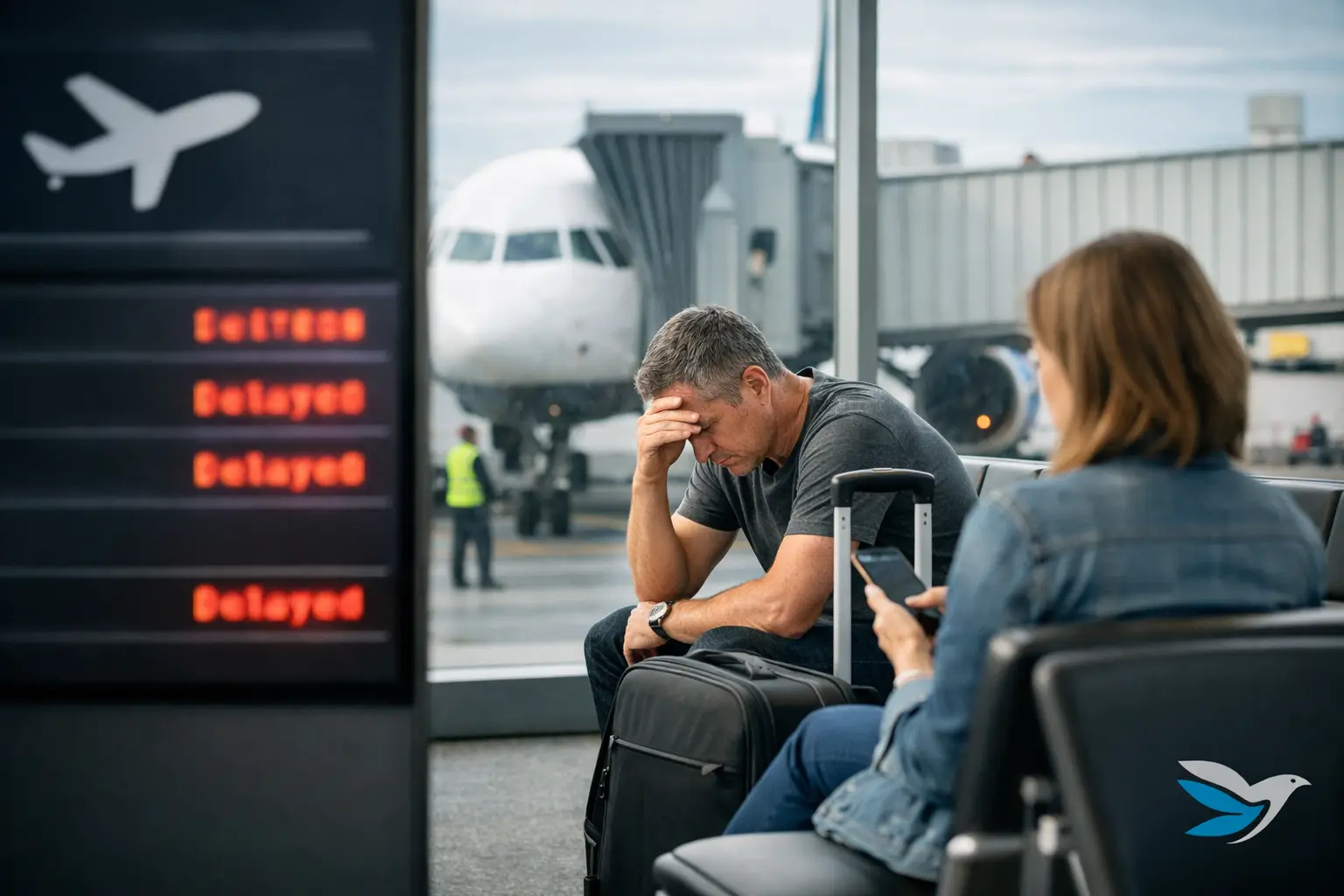
A delay can begin before an aircraft ever leaves the gate. Your departure board may change by 20 minutes, then an hour, while the crew, airline dispatchers, airport staff, and air traffic control work through conditions you cannot see from the terminal. Knowing what happens during flight delays can make the wait less frustrating and help you make smarter decisions about connections, airport pickups, and plans waiting at your destination.
For travelers flying into or out of Southern California airports, the biggest advantage is preparation. A delayed flight does not always mean a canceled trip, but it can change when you land, where you arrive, and how you should coordinate ground transportation.
What happens during flight delays before departure?
Airlines do not delay flights casually. Every flight operates within a detailed schedule involving an available aircraft, a qualified crew, gate space, fueling, baggage loading, maintenance checks, weather conditions, and clearance from air traffic control. A problem with any one of those pieces can affect the scheduled departure time.
Sometimes the cause is visible, such as heavy rain, low cloud cover, wind, or thunderstorms affecting the airport or the route ahead. Other times, the skies may look perfectly clear at your gate while weather at your aircraft’s incoming airport, a busy connection hub, or an air traffic control restriction creates a delay.
A late-arriving aircraft is another common cause. The plane assigned to your flight may be completing a previous trip, and if that trip arrives late, the next departure cannot begin boarding or pushback on schedule. Crew scheduling can also matter. Pilots and flight attendants have federally regulated duty-time limits, so an airline may need to locate a replacement crew if the original team cannot legally continue.
Mechanical delays are frustrating, but they are often a sign that the correct safety decision is being made. Before departure, airline maintenance teams may need to inspect a reported issue, replace a component, or complete required documentation. The timing depends on the problem and on whether the needed personnel or parts are immediately available.
Why the departure time may keep changing
The first delay estimate is often an informed projection, not a promise. Gate agents and airline apps receive updates as dispatchers learn more about weather, maintenance, crew availability, or traffic restrictions. That is why a flight can move from a 30-minute delay to a longer wait, or occasionally recover time and depart earlier than expected.
If the aircraft is already boarded, the crew may wait at the gate for clearance, a route release, or a short-lived weather restriction to pass. In other cases, passengers board and the plane pushes back, only to wait on the taxiway. This is known as a ground delay. The aircraft is operational, but the airport or air traffic control system is managing the flow of departures.
During a longer ground delay, the captain may share updates when new information is available. Airlines must also follow tarmac-delay rules that generally require an opportunity to deplane before a domestic flight has been delayed on the tarmac for more than three hours, subject to safety, security, and air traffic control exceptions. The exact response still depends on the airport, the aircraft’s location, and whether returning to a gate is possible.
What happens after a delayed flight is in the air?
A flight can also be delayed in ways passengers do not immediately recognize. Air traffic control may assign a longer route around weather, place the aircraft in a holding pattern near its destination, or slow arrivals when runways are congested. The plane is still moving, but the arrival time may change.
Airlines build some buffer time into schedules, so a late departure does not always result in an equally late arrival. A strong tailwind, an efficient taxi to the runway, or an open arrival gate can help recover a few minutes. But a delayed arrival can also grow if the destination airport has weather, limited runway capacity, or a gate that is still occupied by another aircraft.
After landing, the flight is not fully complete until the aircraft reaches a gate and passengers are allowed to exit. At busy airports, an arriving plane may wait for a gate, a ground crew, or a baggage team. This final portion of the delay matters when arranging a ride, because the listed landing time is not the same as the time you will be at the curb with your luggage.
Flight delays, missed connections, and rebooking
When a delay puts a connection at risk, check the airline app early. Many airlines offer automatic rebooking options there before you reach a customer service desk. If your itinerary was booked as one reservation, the airline is generally responsible for helping you get to your final destination when its delay causes a missed connection, though the available alternatives can vary widely.
A few practical choices can preserve your options. Keep boarding passes and confirmation numbers accessible, charge your phone, and avoid checking out of the secure area unless you are certain you will not need to re-clear security. If you have an important event, cruise departure, business meeting, or hotel reservation, notify the relevant provider as soon as your arrival time becomes uncertain.
For separate tickets, the situation is less predictable. If you booked one airline to Los Angeles and a different airline onward under separate confirmations, the second airline may not treat the delay as its responsibility. Extra time between separately booked flights is especially valuable.
What compensation or assistance can you expect?
It depends on the reason for the delay, the airline’s policies, and the route. In the United States, airlines are not generally required to provide cash compensation simply because a domestic flight is delayed. However, many carriers publish commitments for meals, hotel accommodations, or ground transportation when a controllable issue such as maintenance or crew scheduling creates a significant disruption.
Weather and air traffic control delays are usually outside an airline’s control, which can limit vouchers or hotel coverage. That does not mean you should assume there is no help available. Ask calmly and specifically about rebooking, meal vouchers, baggage access, overnight accommodations, and any available waivers. Travel insurance and the protections attached to certain credit cards may also help, but coverage terms differ and documentation matters.
If your flight is canceled or significantly changed and you choose not to travel, you may be entitled to a refund rather than a future travel credit. Confirm the details directly with the airline before accepting an alternative itinerary.
How to manage your airport pickup during a delay
A fixed pickup time can become stressful when your flight is late. The most dependable approach is to provide your transportation provider with your flight number, not only your scheduled arrival time. Flight tracking gives the chauffeur or dispatch team a clearer picture of actual arrival changes, although it cannot eliminate variables such as gate holds, immigration lines, or delayed baggage.
For domestic arrivals, allow time after landing to deplane, walk to baggage claim, collect checked bags, and reach the designated pickup area. At LAX, airport traffic and pickup procedures can add time even on a normal travel day. International arrivals may need additional time for passport control, customs, and baggage collection.
If your flight has a major delay, send an update once you know your revised itinerary, especially if you are rerouted to a different airport or arriving late at night. A professional private car service can adjust more effectively when it has accurate flight details and a working passenger contact number. That is particularly helpful for families managing children, car seats, and luggage after a long day of travel.
A calmer plan when the schedule changes
The best response to a flight delay is not to guess. Monitor the airline app, listen for gate announcements, keep your destination contacts informed, and give your airport transportation provider the details needed to follow your arrival. Build extra time into plans that have a hard deadline, such as a cruise departure, wedding, or corporate presentation.
When the trip finally resumes, reliable ground transportation can turn an unpredictable airport day into a more comfortable final leg. Black Crystal Transportation helps travelers continue from the airport with a reserved private vehicle, professional chauffeur, and the reassurance that someone is prepared for the arrival time you actually have – not just the one printed on the original itinerary.